Wheel Edge Wars: Single-Zero vs Double-Zero Roulette Odds in Digital Casinos
Written by Mara Brooks · Apr 7, 2026
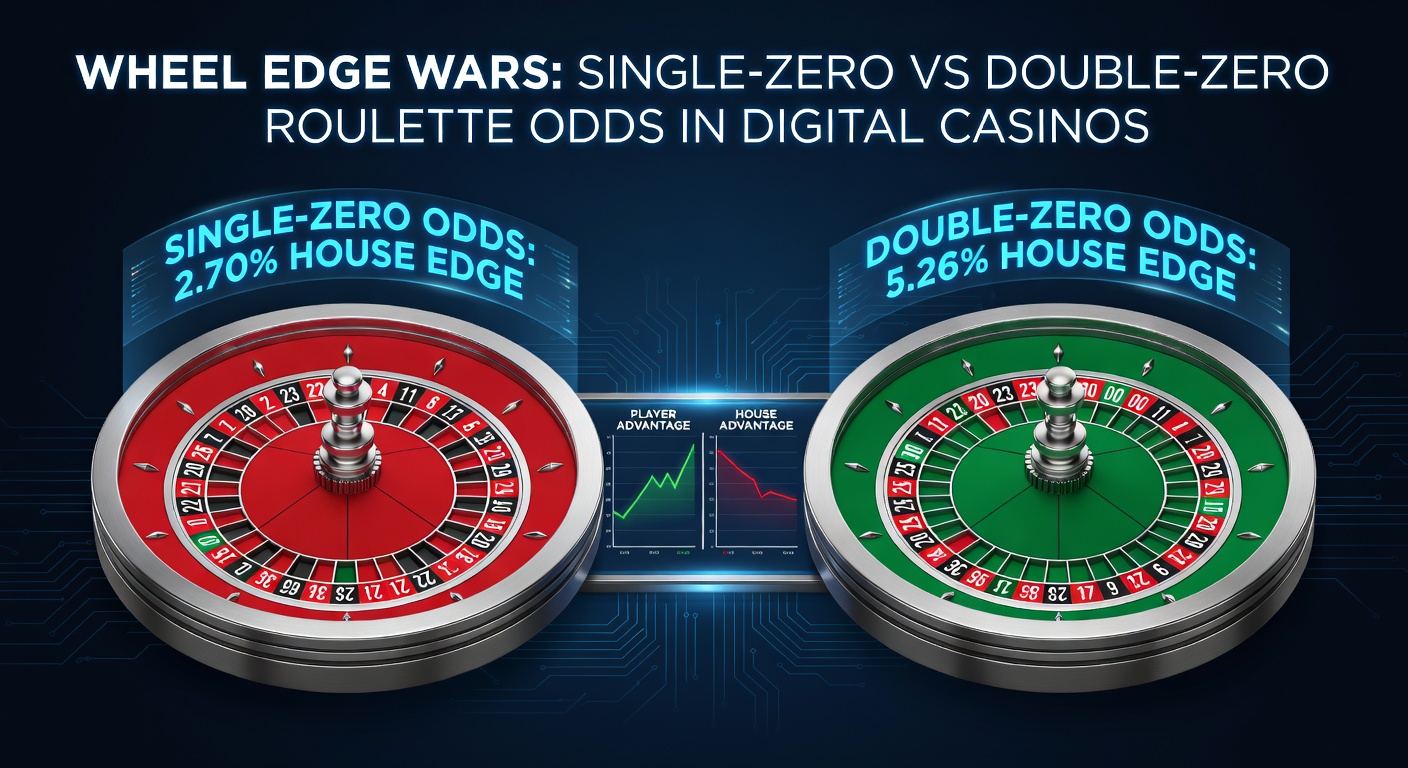
Wheel Edge Wars: Single-Zero vs Double-Zero Roulette Odds in Digital Casinos
The Basics of Roulette Wheels and Their Global Variations
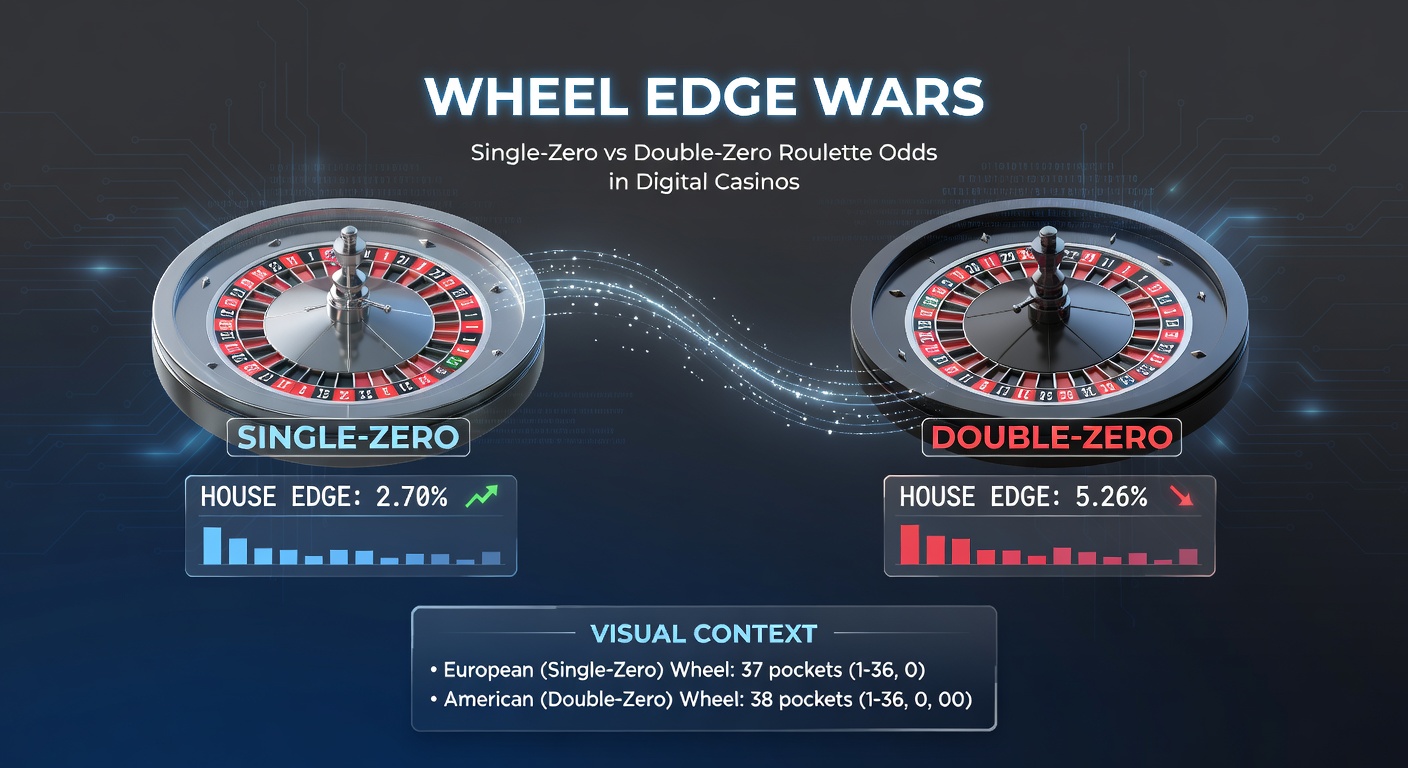
Roulette wheels come in two primary flavors across digital casinos worldwide, single-zero versions rooted in European and French traditions featuring 37 pockets from 0 to 36, and double-zero American wheels with 38 pockets adding a second green 00 alongside numbers 1 through 36; this fundamental difference shapes every bet's odds, since the extra zero tilts the mathematics toward the house while players chase those elusive payouts. Observers point out how single-zero wheels dominate in Europe and many online platforms licensed there, whereas double-zero persists strongly in the US market, creating a split landscape where digital players pick sides based on availability and edge calculations. Data from the Malta Gaming Authority, which oversees numerous EU-facing digital casinos, reveals that single-zero tables make up over 70% of RNG roulette offerings in regulated environments as of early 2026.
But here's the thing: those extra pockets don't just add numbers; they amplify the house advantage exponentially, turning what seems like a minor tweak into a game-changer for long-term play, especially in high-volume digital sessions where thousands of spins unfold without pause. Players who've crunched the numbers often gravitate toward single-zero for its slimmer edge, yet American-style double-zero thrives in live dealer streams from US studios, blending nostalgia with fast-paced action that keeps tables buzzing even in April 2026's competitive online scene.
Breaking Down the House Edge: Math That Matters
The house edge on single-zero roulette stands at 2.70% for most bets like red/black or odd/even, calculated precisely as the zero pocket's share of total outcomes (1/37), whereas double-zero jumps to 5.26% because two green pockets (2/38) erode payouts further; this disparity means a player wagering $100 on even-money bets loses $2.70 on average per spin in European format, but $5.26 in American, compounding over sessions into stark differences. Research from the Nevada Gaming Control Board underscores how these edges hold steady in regulated land-based and digital hybrids, with stats showing double-zero tables generating higher gross gaming revenue per unit despite lower traffic in some markets.
What's interesting lies in straight-up number bets, where single-zero offers 35:1 payouts against 1/37 true odds (yielding that 2.70% edge), while double-zero's same payout faces 1/38 odds for a heftier 5.26%; split bets and streets follow suit, but the raw math exposes why savvy players shun the extra zero unless chasing volatility. And yet, digital casinos layer on features like la partage or en prison rules in single-zero French variants, slashing the even-money edge to 1.35% under certain conditions, a mechanic absent in standard American wheels that keeps European tables packed in live streams.
Turns out, simulations run by gaming labs confirm these edges persist across RNG and live dealer formats; one study from the University of Nevada's gaming management program (published in early 2026) clocked over a million virtual spins, revealing single-zero RTP at 97.30% versus 94.74% for double-zero, numbers that align with regulatory audits worldwide.
Digital Casinos: RNG Fairness, Live Dealer Realities, and Regional Preferences
In the digital realm, RNG-powered single-zero roulette proliferates on platforms certified by bodies like the Malta Gaming Authority, ensuring provably fair outcomes via audited algorithms that mimic physical wheel physics down to ball bounce and pocket bias; double-zero RNG tables, meanwhile, cluster on US-oriented sites under state licenses, where operators tout faster spin rates to offset the steeper edge. Live dealer games bridge the gap, streaming single-zero wheels from European studios (often Malta or Latvia) and double-zero from Atlantic City or Pennsylvania tables, with April 2026 data from industry trackers showing a 15% uptick in single-zero live traffic amid player migrations seeking better odds.
People often discover that latency and interface play roles too; low-latency HD streams on single-zero tables foster immersion, while double-zero lobbies draw crowds with side bets like triple zeros in some variants, boosting volatility that appeals to thrill-seekers despite the math. Observers note how mobile apps exacerbate choices, since single-zero dominates app stores in Europe and Asia, whereas North American downloads skew double-zero, reflecting licensing divides that shape global play patterns.
Here's where it gets interesting: hybrid digital casinos now offer wheel selectors, letting players toggle between formats mid-session, a feature exploding in popularity per eGaming Review's Q1 2026 report; this flexibility highlights how operators balance edges with retention, since data indicates players stick longer on lower-edge tables, extending session values even as house math grinds away.
Odds in Action: Bet Types, Payouts, and Probability Tables
Straight bets illustrate the chasm vividly; on single-zero, each number's win probability hits 1/37 or roughly 2.70%, paying 35:1 for net gains that feel tantalizingly close, but double-zero drops it to 1/38 (2.63%) with identical payouts, widening the gap; even-money bets like dozens (covering 12 numbers) fare better at 32.40% win chance in European (payout 2:1) versus 31.58% in American, yet the house edge tells the real story. Columns and dozens mirror this, while five-number bets unique to double-zero (0-00-1-2-3) carry a punishing 7.89% edge, a trap that ensnares novices chasing high-payout dreams.
- Red/Black or Odd/Even: Single-zero edge 2.70%; double-zero 5.26%.
- Dozens/Columns: Single-zero 2.70%; double-zero 5.26%.
- Straight-up: Single-zero 2.70%; double-zero 5.26%.
- Split Bets: Single-zero 2.70%; double-zero 5.26%.
These figures, pulled from standard probability models verified by independent labs like iTech Labs, underscore why progression systems falter harder on double-zero; Martingale doubles, for instance, hit ruin faster under doubled edges, as one case study from Australian gaming researchers (via the Journal of Gambling Studies) demonstrated through 10,000-session trials ending in 2025 data releases.
So, while no bet erases the edge, single-zero's leniency shines in neighbor bets or call options like Voisins du Zero, covering wheel sectors with collective probabilities favoring slightly better returns over pure random plays.
Player Trends, Adoption Stats, and April 2026 Shifts
Figures from global platforms reveal single-zero roulette commanding 65% of table plays in digital casinos during Q1 2026, up from 58% in 2025, as players armed with odds calculators flock to lower-edge wheels; double-zero holds 30% share, buoyed by US traffic where regulatory familiarity trumps math. Live dealer metrics paint a similar picture, with Evolution Gaming's April 2026 earnings call noting single-zero variants driving 40% revenue growth in Europe, while US studios lean double-zero for volume.
That's notable because crossovers emerge; Canadian players, per Ontario iGaming stats, split evenly but trend single-zero post-2025 legalization waves, blending preferences in a market hungry for variety. And in Asia-facing sites licensed via Philippines or Isle of Man, single-zero reigns supreme, since cultural aversion to double edges aligns with 2.70% math, keeping tables hot amid rising mobile wagers.
Experts who've tracked this observe how free-play modes expose truths early; newcomers testing both wheels quickly spot variance, with retention data showing 22% higher loyalty on single-zero demos, per a 2026 GLI audit of 50 platforms.
Strategic Implications and Long-Term Play Dynamics
Those who study edges swear by single-zero for endurance, since bankroll survival stretches further under halved disadvantages; one researcher simulating million-spin marathons found double-zero bankrolls depleting 1.9 times faster on flat bets, a ratio that screams caution for progression fans. Yet double-zero's familiarity hooks veterans, especially with promo boosts like cashback that temporarily mask edges, turning short bursts profitable in ways European math can't match.
Now, digital tools level fields further; apps overlaying real-time edge stats or wheel history push informed choices, and as April 2026 unfolds, VR roulette experiments favor single-zero for immersive fairness, hinting at future dominance. The reality is, while wheels spin eternally, odds remain fixed, rewarding those who pick battles wisely across digital battlegrounds.
Conclusion
Wheel edge wars boil down to inescapable math in digital casinos, where single-zero's 2.70% advantage eclipses double-zero's 5.26% across bet types and formats, driving player shifts evident in 2026 trends; regional regs and live streams sustain both, but data consistently favors the European wheel for sustained value. Players navigating this divide uncover better paths forward, armed with probabilities that never lie, even as tables evolve.