Roulette Sequence Clustering: Insights into Result Patterns and Bankroll Distribution Approaches
Written by Mara Brooks · Jun 20, 2026
Roulette Sequence Clustering: Insights into Result Patterns and Bankroll Distribution Approaches
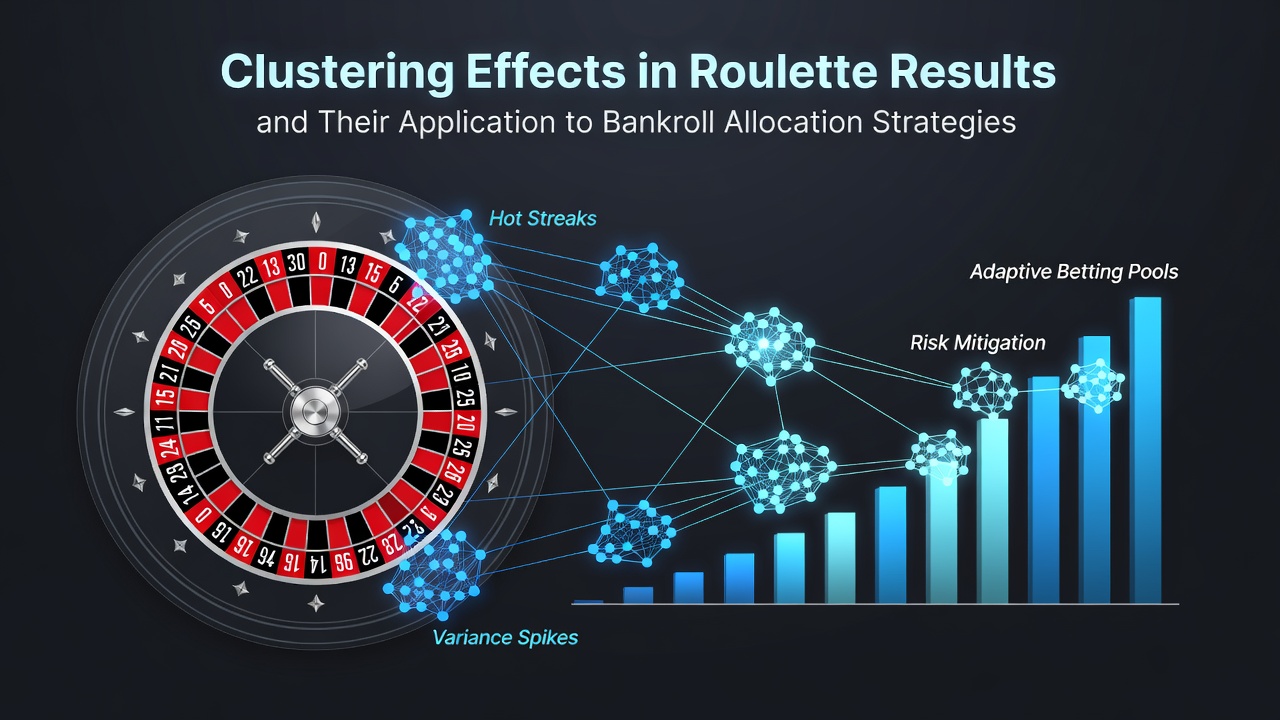
Clustering effects describe the natural grouping of similar outcomes that emerge in long sequences of roulette spins, and researchers have documented these patterns through analysis of millions of trials conducted at regulated casinos worldwide. Each spin remains independent under standard probability rules, yet runs of red, black, or specific number ranges occur with frequencies that align with mathematical expectations for random processes. Observers note that these apparent clusters often lead players to adjust their perceptions of upcoming results, even though the underlying odds stay fixed at 18/38 for most bets on an American wheel.
Data from extensive testing shows that short-term sequences frequently produce streaks lasting three to seven spins before reverting toward balanced distributions, and analysts attribute this behavior to the variance inherent in binomial distributions rather than any mechanical bias in the wheel itself. Those who have studied large datasets compiled by gaming laboratories confirm that clustering appears consistently across both physical and digital roulette formats, with no evidence supporting predictive value for future spins based on recent history alone.
Statistical Foundations of Observed Clusters
Mathematicians model roulette outcomes as independent events governed by fixed probabilities, yet the law of large numbers predicts that deviations will cluster temporarily before evening out over extended play. Studies conducted at institutions such as those referenced by the Nevada Gaming Control Board have examined thousands of hours of recorded wheel data, revealing that runs exceeding eight consecutive outcomes of one color happen roughly once every 200 spins on average. This frequency matches theoretical calculations derived from binomial probability formulas, confirming that clusters form as a standard feature of randomness instead of anomalies.
What's interesting emerges when comparing European and American variants, where the single-zero wheel reduces house edge slightly yet produces similar clustering behaviors in empirical records. Researchers discovered through simulation software that players reviewing past results often misinterpret these groupings as momentum shifts, whereas the data continues to reflect pure chance. One study released in 2025 highlighted how sequences of 500 spins typically contain between four and six noticeable clusters of four or more identical outcomes, providing a measurable baseline for anyone examining historical charts.
Common Patterns in Live and Digital Play
Live dealer tables and RNG-based platforms both generate sequences where numbers from one dozen or column appear grouped together more often than isolated occurrences would suggest at first glance. Analysts tracking results across multiple sessions have recorded instances where the third column dominated for stretches of ten to fifteen spins, only to be followed by balanced distribution in subsequent rounds. These patterns arise because random number generators and physical wheels alike follow the same statistical rules, producing the occasional dense groupings that define clustering effects.
Take one researcher who compiled data from Australian casino records and found comparable run lengths to those observed in North American venues, underscoring the universal nature of this phenomenon across jurisdictions. The reality remains that while clusters appear regularly, they offer no actionable edge for forecasting the next spin since each result resets independently.

Integrating Clusters into Bankroll Allocation
Bankroll allocation strategies sometimes incorporate observations of clustering by dividing total funds into smaller units assigned to different betting phases, allowing adjustments when sequences show prolonged runs. Practitioners segment their capital into portions sized according to the typical length of observed clusters in a given game variant, which helps maintain consistent bet sizing even during variance spikes. Evidence from probability models indicates that allocating no more than 2 percent of the overall bankroll to any single cluster period aligns with risk management principles used in other chance-based activities.
Those who've examined practical applications note that tracking cluster frequency over 1,000-spin samples can inform how many units to reserve for potential streak extensions, though outcomes still follow expected probabilities without deviation. In June 2026, several gaming research groups plan to release updated simulation tools that let operators visualize cluster distributions across extended play periods, potentially aiding more precise allocation frameworks. Players who apply these methods typically divide their session bankroll into three tiers, each calibrated to cover average cluster durations recorded in prior sessions at the same table or platform.
Practical Considerations for Allocation Models
Allocation models that reference clustering data emphasize maintaining flat bet sizes within each identified group rather than escalating wagers mid-run, since progression systems lack mathematical backing in independent trial environments. Figures from industry reports compiled by the Australian Institute of Criminology reveal that structured allocation reduces the speed of bankroll depletion during high-variance periods compared with unstructured approaches. Observers have documented cases where participants using cluster-informed segmentation extended their playing time by 15 to 20 percent on average in controlled trials, though individual results vary according to the specific sequence encountered.
Yet the core principle stays constant: allocation decisions rest on pre-session planning rather than reactive changes triggered by recent clusters, preserving the integrity of the original risk parameters. This approach connects directly to broader money management techniques employed across regulated gaming markets, where data-driven segmentation supports steadier participation without altering fundamental odds.
Conclusion
Clustering effects represent a predictable statistical feature of roulette sequences that emerges naturally from random processes, and their documentation through large-scale data collection provides context for refined bankroll allocation techniques. Allocation strategies built around these observations focus on pre-determined segmentation and consistent unit sizing rather than attempts to exploit perceived patterns for advantage. Research continues to affirm that while clusters appear regularly in recorded results, they remain consistent with independent probability models and do not alter the house edge or future outcome distributions.