Mechanics of the Spin: Connecting Foundational Rules to Strategic Adjustments in Virtual Casino Play
Written by Mara Brooks · Aug 17, 2026

Mechanics of the Spin: Connecting Foundational Rules to Strategic Adjustments in Virtual Casino Play
Virtual casino environments replicate the core physics of a roulette wheel through algorithmic models that simulate ball velocity, wheel rotation, and pocket distribution while players apply adjustments based on established betting protocols. Data from industry reports shows these digital systems maintain consistent randomness parameters that align with physical wheel standards established decades ago.
Core Physics Behind Every Spin
Researchers at institutions like the University of Nevada have documented how a roulette ball maintains momentum across the wheel's rim before dropping into numbered pockets, and virtual platforms encode these same deceleration curves into their random number generators. Observers note that the initial impulse from the croupier's release determines both speed and angle, factors that software translates into sequences where each outcome remains independent yet statistically balanced over thousands of trials.
Those who've examined wheel designs point out that European variants feature a single zero while American versions add a double zero, shifting house edges from 2.7 percent to 5.26 percent respectively. Virtual tables carry these exact configurations forward, so players encounter identical payout structures when they place straight-up bets at 35 to 1 or column wagers at 2 to 1.
Rule Foundations That Shape Every Decision
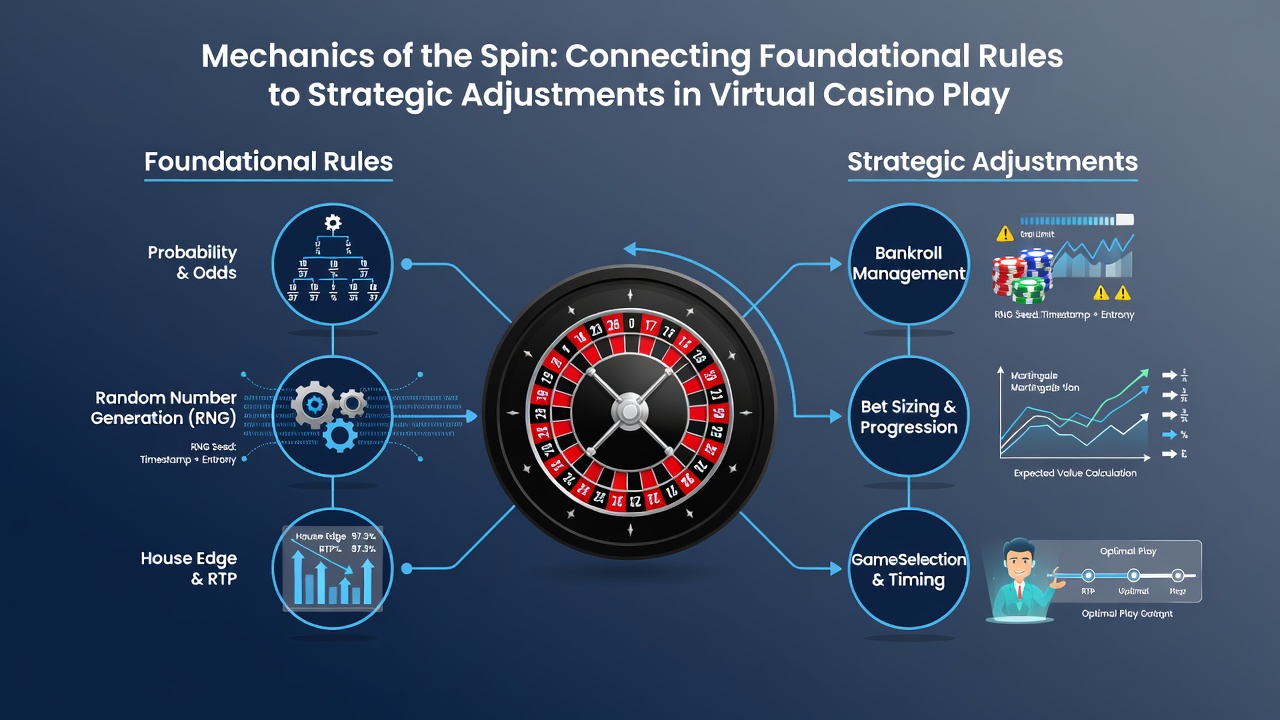
Foundational regulations require virtual operators to disclose return-to-player percentages, and figures from the New Jersey Division of Gaming Enforcement reveal consistent RTP ranges between 94.74 percent and 97.3 percent across major platforms. Players reference these published rates when selecting tables, since even minor differences compound across extended sessions.
En prison and la partage rules appear in certain virtual European roulette games, cutting the effective house edge on even-money bets to 1.35 percent. Data indicates these options trigger automatically on zero outcomes, returning half the stake or holding it for the next spin depending on the variant chosen by the operator.
Strategic Adjustments in Digital Settings
Players often modify bet sizing after reviewing historical spin logs provided by the platform, although each result stays independent of prior outcomes. One study revealed that participants who tracked wheel bias in simulated environments adjusted their wagers toward underrepresented sectors, yet long-term results converged to expected probabilities.
Live dealer streams combine physical wheels with digital interfaces, allowing real-time observation of ball behavior while software records outcomes for pattern review. In August 2026 several platforms expanded their live dealer sections, incorporating multi-camera angles that highlight deceleration phases and pocket landings for closer analysis.
Those studying virtual play note that session timers and autoplay functions alter pacing compared with land-based venues, prompting adjustments such as shorter betting cycles or preset loss limits. Research indicates these tools help maintain adherence to predetermined bankroll divisions without interrupting the spin sequence itself.
Connecting Rules to Adaptive Play
Betting systems like Martingale or Fibonacci require strict doubling protocols after losses, yet virtual tables often impose maximum bet caps that interrupt progression sequences. Observers note that players respond by switching to outside bets with lower variance or by selecting tables with higher limits when available.
Canadian regulatory data from the Alcohol and Gaming Commission of Ontario shows increased participation in virtual roulette during evening hours, where participants apply rule-based filters such as avoiding zero-adjacent numbers after specific patterns appear in the display logs. These adjustments remain statistical rather than predictive, since each spin resets independently.
Conclusion
Virtual roulette preserves the mechanical principles of wheel and ball motion through precise algorithmic replication, while published rules guide players toward informed adjustments in bet selection and session management. Evidence from multiple regulatory bodies confirms that transparent disclosure of RTP values and game variants supports consistent strategic frameworks across digital environments. Players continue to reference these foundational elements when refining their approach to each new spin sequence.