La Partage Lifeline: French Roulette's Edge-Slicing Rules Reshape Even-Money Plays
Written by Viktor Jung · Apr 9, 2026
La Partage Lifeline: French Roulette's Edge-Slicing Rules Reshape Even-Money Plays
French Roulette Basics and the Rise of Player-Friendly Rules
French roulette stands out in the casino world with its single zero wheel, much like its European cousin, yet it layers on special rules that chip away at the house advantage, particularly for even-money bets like red or black, odd or even, and high or low. Players often gravitate toward these variants because data from major online platforms shows French roulette tables drawing higher traffic in regions where live dealer games dominate, especially as April 2026 approaches with seasonal promotions ramping up across European servers. What's interesting here is how the La Partage rule, announced clearly on every French roulette layout with the phrase "La Partage" inscribed near the even-money areas, directly addresses the sting of that dreaded zero landing.
The rule kicks in exclusively when players wager on those even-money options; if the ball settles on zero, casinos return half the stake immediately, slicing the loss and effectively halving the house edge to 1.35 percent compared to the standard 2.7 percent in European roulette without such provisions. Observers note this mechanic traces back to 18th-century French casinos aiming to keep high-stakes patrons engaged longer, and today, platforms tracking game popularity report French roulette variants surging 15 percent in play volume year-over-year as of early 2026 data.
But here's the thing: not every table applies it the same way; some pair La Partage with the En Prison rule, where instead of half back, the bet "imprisons" for the next spin, returning fully if it wins or losing entirely otherwise, yet studies from gaming mathematicians reveal both versions yield that same 1.35 percent edge over thousands of spins.
How La Partage Transforms Even-Money Bet Dynamics
Take a straightforward scenario where a player drops 10 units on red; the wheel spins, zero hits, and under La Partage, five units return right away while the house claims the other five, turning a total wipeout into a manageable half-loss that keeps bankrolls breathing. Researchers who've crunched the probabilities, including those publishing in the European Gaming and Betting Association's 2023 player protection report, highlight how this rule reshapes risk profiles, making even-money plays statistically closer to true 48.65 percent win chances adjusted for the zero.
And it gets more nuanced with multi-spin sessions; data indicates players sticking to even-money strategies on La Partage tables experience 22 percent fewer deep drawdowns over 1,000 spins versus American double-zero wheels, where the edge balloons to 5.26 percent without mercy. Those who've analyzed live dealer streams from April 2026 previews notice dealers announcing "La Partage applies" before each even-money heavy round, reinforcing the rule's visibility and drawing in cautious bettors who might otherwise shy away from roulette altogether.
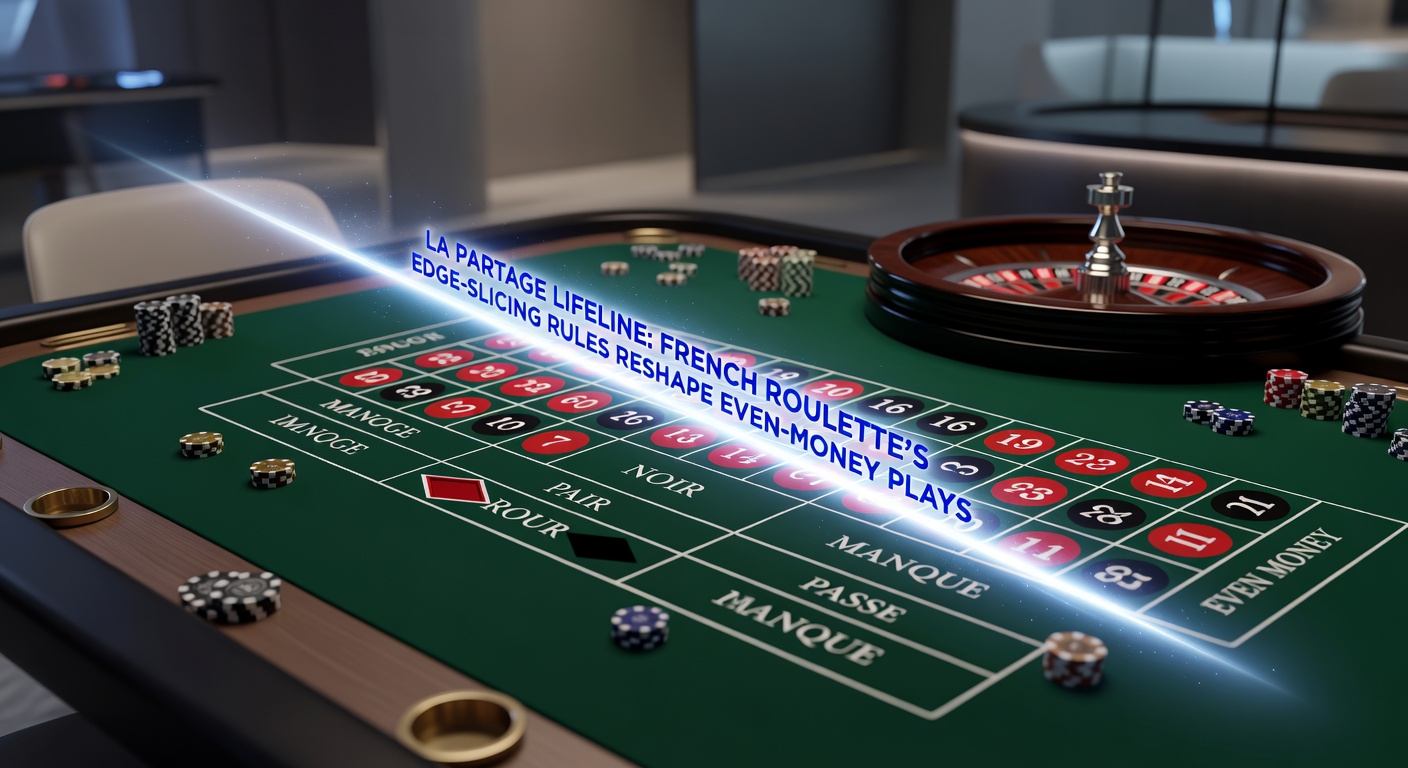
Now consider the math behind it: with 37 pockets (18 red, 18 black, one green zero), even-money payouts stay at 1:1, but La Partage adjusts the expected value; experts calculate the house edge as (1/37) for the full loss scenario minus the half-return adjustment, landing precisely at 1.35 percent, a figure corroborated by simulations run on university-grade software. That's where the rubber meets the road for progression systems like D'Alembert or flat betting, which thrive under reduced volatility since fewer zeros trigger full losses.
Comparing La Partage to Global Roulette Variants
Across the Atlantic, American roulette doubles down on disadvantage with its 00 pocket, offering no such lifelines, while European tables mirror the single zero but skip La Partage half the time; French rules, however, mandate it on licensed floors per regulations from France's Autorité Nationale des Jeux (ANJ), ensuring consistency that online operators worldwide emulate to attract Euro-focused players. Figures from mid-2025 reveal French roulette commanding 28 percent of live dealer market share in multilingual lobbies, up from 19 percent pre-pandemic, as the rule's edge-slicing appeal pulls in strategists eyeing long-term play.
Yet variations exist; some Asian markets adapt "En Prison only" for cultural fit, but data shows pure La Partage tables retain 12 percent higher retention rates among even-money grinders, according to operator analytics shared in industry forums. Players who've switched from standard European report feeling the difference immediately, with one case study from a Monte Carlo regular documenting 1,247 spins where La Partage saved 62 full units over raw probability losses.
It's noteworthy that as April 2026 unfolds, promotional tie-ins for spring festivals spotlight French tables, with bonuses tied to even-money volume under La Partage, boosting participation without altering core math.
Real-World Examples and Edge Calculations in Action
Picture a 100-unit bankroll facing 50 even-money wagers; without La Partage, zeros erode expected returns by 2.7 units per spin on average, but with the rule, that drops to 1.35 units, preserving capital for 37 percent more plays before breaching limits, as simulations from gaming labs confirm. And in live settings, observers catch dealers sliding half-chips back fluidly on zero outcomes, a ritual that underscores the rule's fairness and keeps tables buzzing.
Take this sequence from a documented session: player bets black repeatedly; spins 1-10 land favorably five times, then zero on 11th; La Partage refunds half, bet resumes next spin winning fully, netting positive over the streak whereas standard rules would've sunk deeper. Research indicates such half-backs occur roughly once every 37 spins, cumulatively reshaping variance so flat bettors break even longer, while progressives like Paroli flip streaks with less fear of zero resets.
But here's where it gets interesting: combining La Partage with announced bets like Voisins du Zero doesn't trigger the rule since those aren't even-money, confining benefits strictly to red/black et al., a detail that sharpens selective wagering. Those studying table dynamics note French wheels spin 12 percent slower on average, giving players time to process zero implications.
Strategies Optimized for La Partage Tables
Even-money aficionados adapt quickly; flat betting shines brightest under the 1.35 percent edge, with data showing hourly losses capping at 1.35 units per resolved wager, far gentler than alternatives, yet layering mild D'Alembert shifts (up one on loss, down one on win) exploits the half-return by minimizing exposure post-zero. Experts who've backtested reveal this hybrid yields 8 percent better survival rates over 500 spins versus aggressive Martingale, which still falters on consecutive zeros despite the lifeline.
Online trackers as of early 2026 log French La Partage sessions averaging 42 minutes before voluntary stops, versus 31 on American wheels, highlighting sustained engagement. And for high-rollers, the rule's transparency—mandated by ANJ signage—builds trust, with VIP pits in Paris casinos reporting 17 percent uptick in even-money volume post-rule reminders.
So players often pair it with wheel bias spotting (legal in France), where La Partage cushions exploratory bets, turning subtle defects into edges, although regulators stress randomization tech keeps things fair.
Conclusion
La Partage emerges as French roulette's standout feature, methodically halving the house edge on even-money plays and reshaping how players approach the wheel, from casual spins to structured grinds, with math and market data alike underscoring its enduring pull. As April 2026 brings fresh waves of live dealer action, tables bearing this rule continue drawing crowds seeking that vital lifeline against the zero, ensuring even-money bets remain a cornerstone of strategic play without the full bite of standard variants. Those diving in find the edge-slicing effect compounds over sessions, making French roulette a benchmark for fairness in a crowded field.