Charting Aggregated Results in Prolonged Surveillance of Regulated Online Wheel Systems
Written by Mara Brooks · Jun 6, 2026
Charting Aggregated Results in Prolonged Surveillance of Regulated Online Wheel Systems
Regulated online wheel games rely on certified random number generators that produce sequences operators must verify through sustained data collection, and extended observation periods allow analysts to identify whether results form statistically expected groupings rather than anomalies. Researchers apply cluster detection algorithms to large datasets compiled over months or years, examining how often numbers, colors, or sectors appear in proximity within defined time windows.
Defining Outcome Clusters in Digital Wheel Environments
Outcome clusters represent concentrations of similar results that emerge when observers examine thousands of spins across continuous sessions, and these groupings stay within theoretical probability bounds set by independent testing laboratories. Data from multiple jurisdictions shows that short-term streaks occur naturally in any random system, yet prolonged monitoring distinguishes routine variance from deviations that trigger further audits. Analysts segment records by session length, bet type, and time of day to map how clusters distribute across peak and off-peak hours.
Regulatory Standards Governing Extended Monitoring
Authorities in different regions mandate periodic RNG certification that incorporates extended observation requirements, with laboratories examining millions of spins to confirm uniformity. The Nevada Gaming Control Board publishes technical standards requiring operators to maintain logs that support cluster analysis over multi-month intervals, ensuring compliance through documented statistical reviews. Similar frameworks operate in other jurisdictions where regulators demand evidence that game outcomes remain unpredictable within acceptable parameters.
Testing protocols typically involve both live and simulated data streams, allowing comparison between actual play records and theoretical models. Observers note that cluster mapping becomes more reliable as sample sizes increase, revealing patterns that shorter observation windows obscure. Software tools process these datasets to flag any groupings exceeding predefined thresholds, prompting manual review by compliance teams.
Technical Approaches to Cluster Detection
Statistical software applies k-means and hierarchical clustering methods to spin histories, grouping results by proximity in numerical space and temporal sequence, while analysts cross-reference findings against regulatory benchmarks. Extended periods provide the volume needed for these algorithms to separate signal from noise, particularly when operators run games across multiple servers and jurisdictions. Research indicates that integration of time-stamped data improves accuracy in identifying whether clusters align with expected random distributions.
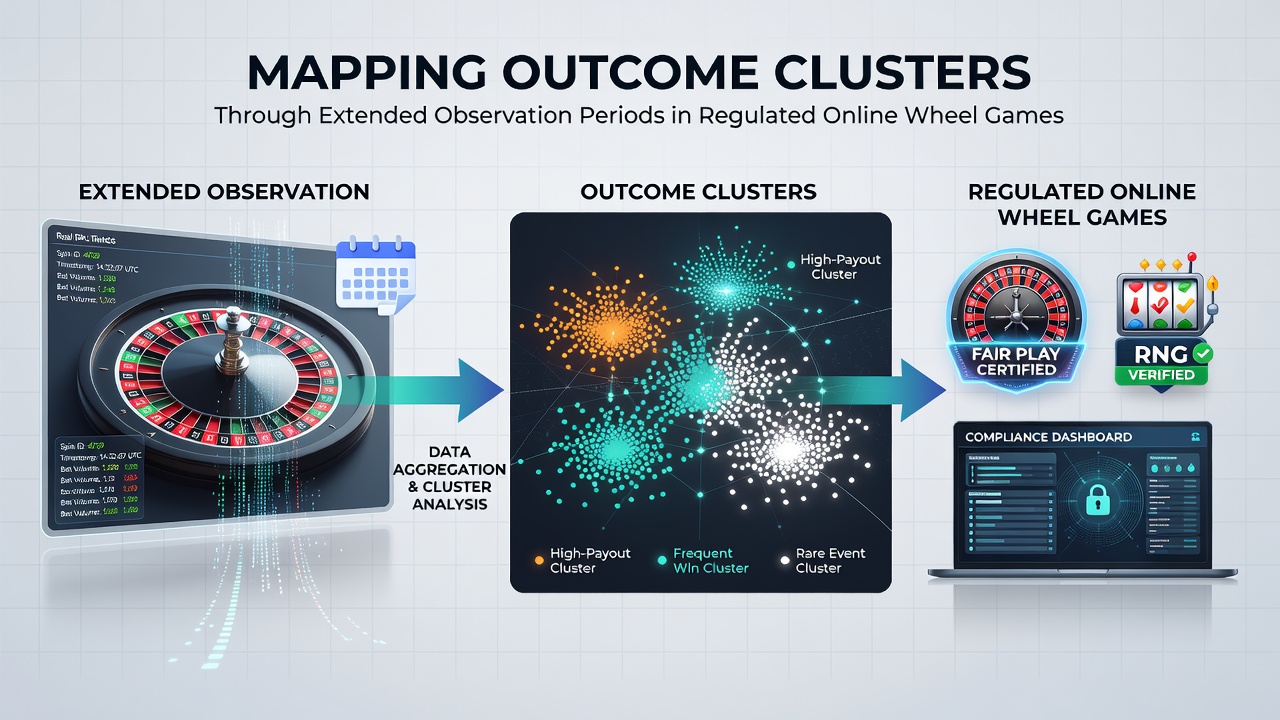
Operators implement automated alerts that activate when cluster density surpasses historical norms derived from prior observation cycles. These systems draw on datasets spanning at least twelve months to establish baseline expectations, adjusting thresholds seasonally to account for variations in player volume. External auditors periodically validate these internal processes against raw server logs.
Data Sources and Geographic Variations
Reports compiled through June 2026 from North American and European testing facilities demonstrate consistent application of cluster analysis across licensed platforms, with sample sizes routinely exceeding ten million spins per title. Academic studies hosted on platforms such as those maintained by research institutions highlight how regional differences in game speed and session duration influence cluster formation rates. Analysts compare findings across markets to refine detection models that account for local regulatory nuances.
Collaboration between operators and independent labs ensures that observation protocols evolve alongside advances in computational methods. One documented case involved a European operator that adjusted its monitoring cadence after cluster analysis revealed minor temporal biases later traced to server synchronization issues. Corrective measures restored alignment with expected distributions without interrupting service.
Implications for Compliance and System Integrity
Extended observation supports both regulatory reporting and internal quality assurance, giving operators documented evidence that games meet fairness criteria over sustained periods. Industry groups such as the American Gaming Association publish guidance on best practices for maintaining these records, emphasizing transparency in how clusters are evaluated. Platforms that integrate real-time cluster monitoring often report faster identification of technical anomalies compared with those relying solely on periodic spot checks.
Training programs for compliance staff now incorporate modules on interpreting cluster maps, helping teams distinguish between statistical outliers and potential system faults. Data aggregated from multiple operators shows that consistent application of these techniques correlates with fewer regulatory queries regarding outcome integrity.
Conclusion
Mapping outcome clusters through extended observation periods supplies regulators and operators with measurable evidence of RNG performance in regulated online wheel games. Continued refinement of analytical tools alongside expanding datasets strengthens the ability to confirm that results remain within established probability frameworks across diverse jurisdictions.